February 28, 2026
How Much Does It Cost to Ship a Motorcycle in 2026? (Real Numbers)
Motorcycle shipping costs range from $200 to $1,800 depending on distance, transport type, and your bike. Here are the real numbers for every route and situation.
Motorcycle Shipping Costs in 2026: What You Will Actually Pay
The question every motorcycle owner asks when buying or selling a bike, relocating, or heading to a rally: how much does it cost to ship a motorcycle?
The honest answer is: it depends. But "it depends" is not helpful when you are trying to budget. So here is a complete breakdown of real motorcycle shipping costs based on actual shipments in 2026.
Motorcycle Shipping Cost by Distance
Short Distance (Under 200 Miles)
For short distances, many shippers use dedicated single-bike trailers or small multi-bike enclosed carriers. Prices at this range are competitive and often negotiable.
Medium Distance (200–800 Miles)
This is the "sweet spot" for motorcycle shipping — enough distance to justify the cost, short enough that transit time is manageable. Popular routes like Virginia to Florida, or Virginia to Ohio, fall in this range.
Long Distance (800–2,000 Miles)
Cross-Country (2,000–3,000+ Miles)
Cross-country shipping (Virginia to California, for example) typically requires 1–2 weeks depending on carrier routes and schedules.
Cost by Motorcycle Type
Your specific bike affects the price. Here is why:
Standard and Commuter Bikes
Harley-Davidson Sportster, Honda CB series, Kawasaki Ninja 400 — these are the easiest to ship. Standard dimensions, manageable weight (350–550 lbs), and no special handling requirements.
Typical cost multiplier: Baseline
Cruisers and Touring Bikes
Harley-Davidson Road King, Indian Roadmaster, Honda Gold Wing — larger, heavier (600–900 lbs), and often carry added accessories. Width can exceed standard trailer slots.
Typical cost multiplier: +10–20%
Sport Bikes
Ducati Panigale, BMW S1000RR, Kawasaki ZX-10R — lighter than cruisers but require special tie-down points. Fairings are vulnerable to strap damage if secured incorrectly.
Typical cost multiplier: Baseline, but requires experienced handlers
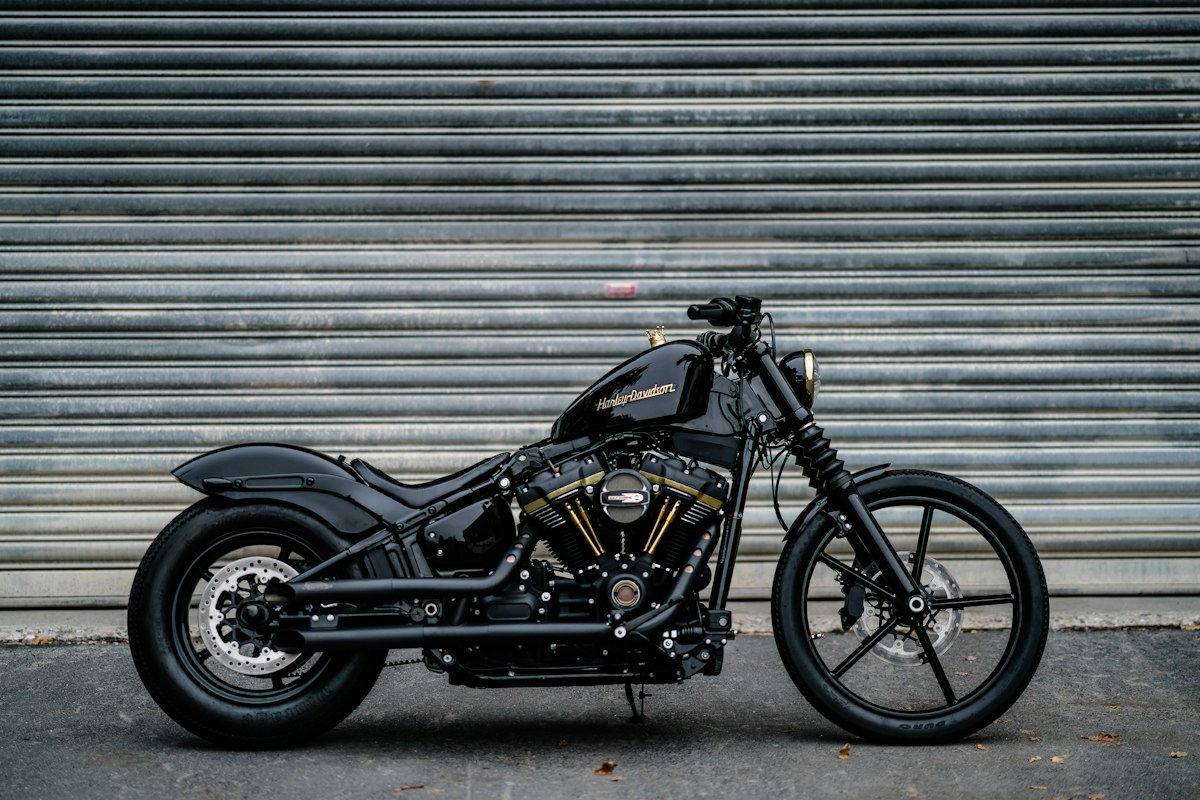
Custom and Chopper Builds
Extended forks, low-slung frames, and non-standard geometry make customs the hardest to secure and transport. Enclosed transport is strongly recommended.
Typical cost multiplier: +15–30%
Adventure and Dual-Sport Bikes
BMW GS series, KTM Adventure — tall bikes with high centers of gravity. Require secure wheel chocks and experience handling them in enclosed trailers.
Typical cost multiplier: Baseline
Open vs. Enclosed Motorcycle Transport: Cost Difference
The choice between open and enclosed transport is the biggest single factor in motorcycle shipping cost.
Open transport loads your bike on an exposed multi-bike trailer. Your bike is secured but exposed to weather and road debris.
Enclosed transport loads your bike inside a covered trailer — protected from weather, debris, and visibility.
Cost difference: Enclosed typically costs 30–50% more than open for the same route.
When to choose enclosed:
When open is fine:
Door-to-Door vs. Terminal-to-Terminal
Door-to-door: We pick up from your home or business and deliver to the exact destination address. Convenient, slightly more expensive.
Terminal-to-terminal: You drop your bike at our nearest terminal; the buyer picks it up at their nearest terminal. Lower cost, requires more coordination.
Typical cost difference: Door-to-door costs $75–$150 more than terminal-to-terminal.
For private party sales, door-to-door is almost always worth the extra cost.
Additional Costs to Budget For
How to Get the Best Motorcycle Shipping Price
Get Your Free Motorcycle Shipping Quote
Tell us your bike (year/make/model), pickup zip code, delivery zip code, and preferred transport type. We will give you a real price in minutes.
Moto Transporters — Serving all 50 states with enclosed and open motorcycle shipping.